
EN
Follow us on
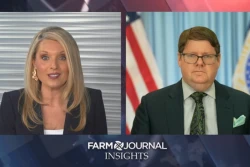
The fertilizer market has been a growing point of tension in agriculture for years, but USDA Deputy Secretary Stephen Vaden says recent meetings in Washington marked a more direct and wide-ranging confrontation between federal officials and the companies that dominate input supply. Those discussions, he says, were not limited to USDA alone but included a broader slice of the administration’s economic leadership, signaling how central fertilizer costs have become to the national conversation on food production and inflation.
Vaden says cabinet-level officials from the Department of Commerce and the U.S. Trade Representative were present, alongside USDA leadership and state agriculture commissioners from Iowa and Georgia. Fertilizer executives were also in the room, making the meeting a rare setting where policy makers, regulators, and industry leaders sat together to address pricing, supply constraints, and long-term market structure.
He says the purpose was not simply informational, but confrontational in the sense of putting real-world farm impacts directly in front of industry decision-makers.
“It was an opportunity for those other cabinet officials to hear from the fertilizer company executives,” Vaden says, “and for those fertilizer company executives to hear from the secretary and me as well as our two state counterparts who joined about the real harm that farmers are facing from uncertainty in the market and equally as importantly, years of elevated prices.”
Vaden says what often gets lost outside agriculture is that the current fertilizer environment is not a short-term disruption, but the continuation of a multi-year pricing trend that has reshaped farm budgets.
“For people who don’t pay attention to ag every day like your listeners do, they may think this fertilizer thing came out of nowhere,” Vaden says. “But American farmers know that we’re on year five or more of elevated prices for fertilizer, and questions about adequate supply of all fertilizer types.”
He adds that the timing of the discussions is critical, as global geopolitical tensions are only adding pressure to already strained markets
Questions about this Article?:
Copyright © 2021-2026. All rights reserved
This website stores cookies on your computer. These cookies are used to collect information about how you interact with our website and allow us to remember you. We use this information in order to improve and customize your browsing experience and for analytics and metrics about our visitors on this website. To find out more about the cookies we use, see ourPrivacy Policy.